How Do I Know If My Homeschool Child Is Learning Enough Science?
The experiment was fun. Your child followed the steps, watched what happened, and filled in the worksheet. But how much of the science can they explain afterward?
Checking homeschool science progress means looking at both content knowledge and scientific thinking. You want to understand what your child knows about the natural world and how they use observations to support an explanation.
Ask what happened and how they know
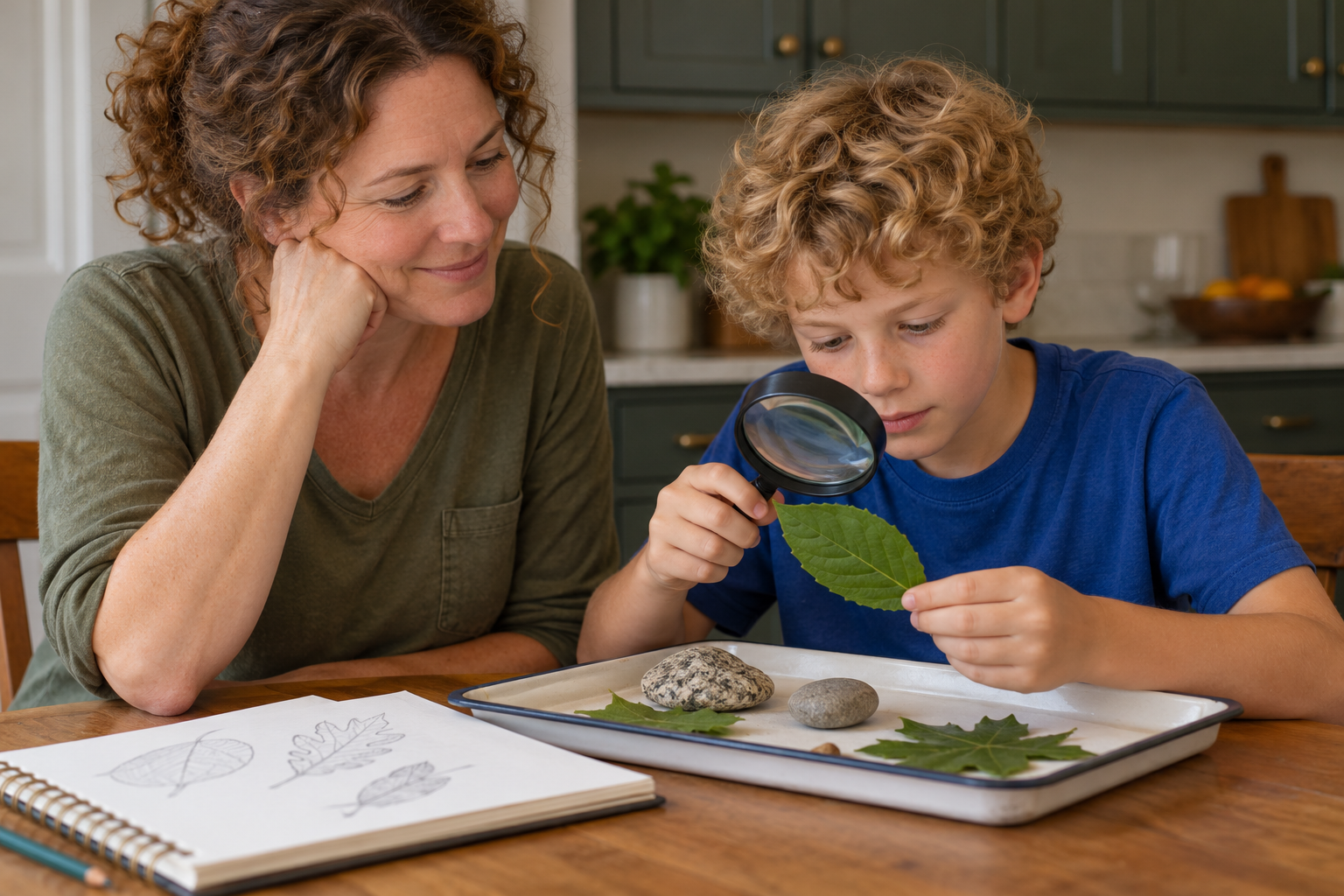
After an activity, ask your child to describe what they observed. Then ask what they think it means. Keep those two questions separate so you can hear the difference between evidence and explanation.
If ice melts on a plate, “the ice became liquid” describes an observation. An explanation about warming connects that observation to a concept. Asking a follow-up question helps you find out how well your child understands the connection.
Our Science Knowledge Base guide explains observation, prediction, inference, investigation, and other skills you can notice during everyday lessons.
Look across the areas you’ve studied
Science covers a wide range of ideas. Your child may know a great deal about animals while having less experience with motion or matter. A strong interest in one area doesn’t tell you everything about their science learning.
- Life science: describing living things and their characteristics.
- Physical science: exploring matter, energy, magnets, and motion.
- Earth science: understanding topics such as rocks, fossils, and changes in the Earth.
- Scientific thinking: comparing, classifying, predicting, investigating, and explaining findings.
These are broad areas to consider as you review your curriculum. The exact topics and sequence will depend on what you’ve chosen to teach.
Check understanding with a new example
If your child learned about magnetic materials, offer a different object and ask for a prediction. What makes them think it will be attracted to a magnet? How could they check?
If they’ve practiced classification, ask them to explain why two objects belong in the same group. The explanation can reveal more than correctly repeating a definition.
Sometimes a written question creates a reading barrier. Notice whether your child understands the concept when discussing it aloud. The Language Arts guide explains comprehension skills that can affect how children approach questions in other subjects.
Use HSTT to add another source of information
Homeschool Test Track offers Science assessments for grades 1–6. Topic-level results, national-average comparisons, and saved assessment history help parents explore strengths and possible learning gaps.
Review the results alongside your child’s investigations and explanations. If a topic is unfamiliar because your curriculum hasn’t covered it, that calls for instruction before you judge how well it has been learned. If it has been taught, use the result to choose a question or activity that explores the difficulty.
An online assessment adds useful information, but hands-on work still matters. Keep observing how your child uses tools, follows safety expectations, and explains evidence during real activities.
Build the next lesson around one question
Choose a manageable question from the results. Can your child distinguish a prediction from an observation? Can they describe how heating changes a material? Plan a short explanation or activity, then ask them to apply the idea to another example.
Keep a dated note or work sample. After teaching and practice, reassess and compare that evidence with HSTT’s saved results.
Start with the format
You can try the free Science demo to see the assessment experience before beginning. For the full account and results process, see how Homeschool Test Track works. The aim is a clearer picture of what your child understands and a practical direction for your next science lesson.